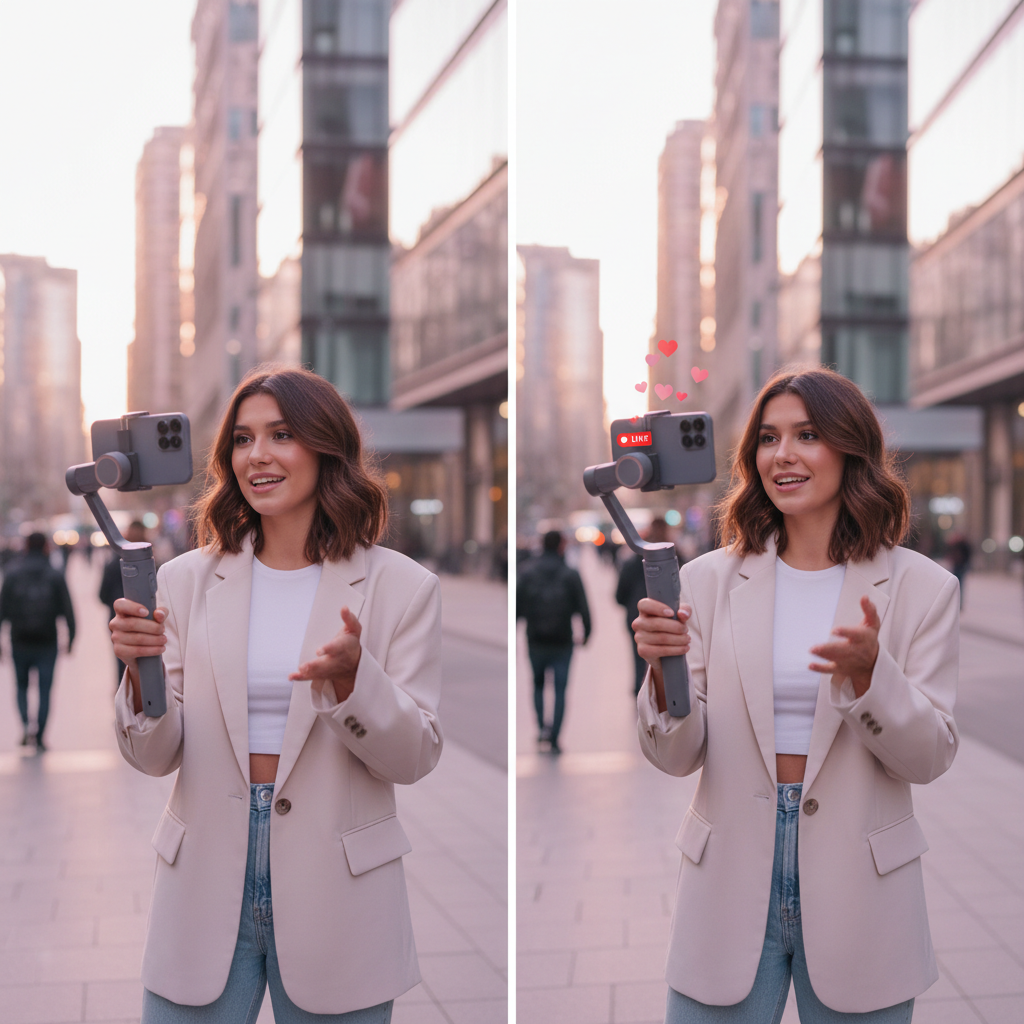
Reels and TikTok look identical to users but behave very differently for creators. Understanding the differences decides where your first hour of effort goes each day.
The algorithms differ in one key way
TikTok tests every video equally — a brand-new account can go viral on video one. Instagram weighs your account's history more heavily; established accounts get faster distribution. Translation: TikTok is better for cold starts and testing ideas, Instagram better for converting an existing audience.
Audiences and intent differ
TikTok skews younger and rewards entertainment, trends and raw authenticity. Instagram Reels reach an older, more purchase-ready audience that also checks your profile and grid. A product demo may flop on TikTok and convert on Reels — and a trend joke may do the reverse.
Specs and details that matter
Both are 9:16 vertical. Safe zones: keep text away from the bottom ~25% and right ~15% (UI overlays). Always caption your videos — 60–80% of viewing is sound-off. Export at 1080×1920, and avoid visibly recycled watermarks: platforms actively downrank content carrying another app's logo.
The repurposing playbook
Film once, publish twice — with native tweaks. Change the first 2 seconds (fresh hook), rewrite the caption for each platform's keyword style, and strip any cross-platform watermark. With this workflow, one production session feeds both platforms at near-zero extra cost.
Where to invest first
If you're starting from zero: TikTok first — faster feedback loops and fairer distribution. If you already have an Instagram audience: Reels first — you'll monetize attention you already own. In both cases, measure saves and shares per view; they predict reach better than likes on both platforms.
Conclusion
Don't choose forever — choose first. Start where your unfair advantage is, master the format, then repurpose. Both platforms reward the same core skills: hooks, retention, consistency.